


Launching in 2026 – unique solution:
Real-time
transfection complex size monitoring
Non-invasive, real-time particle size during complex formation – in closed vials, flasks, and bags.

Transient transfection complex size monitoring
Why it matters
The size of the transfection complex has a major impact on transfection performance – too small or too large can quickly reduce yield.
Because the optimal range can be narrow, even small changes during complex formation can introduce variability — leading to repeated experiments, longer development cycles, and higher cost.
By monitoring complex size during formation, you can more consistently reproduce the mixing conditions that generate the size range you’re targeting — improving consistency and reducing development time.
You would like:
- To increase yield,
- reduce variability,
- and cut development time
- by keeping complex size in the optimal range.

Customer feedback
“Variability in complex size and lack of direct size information results in suboptimal yields and significant costs.”
The NanoLabSizer
What can you expect?
- Real-time size measurements during complex formation
- Maintains sterility
- Direct non-invasive measurements in closed vials, tubes, flasks or bags (up to 3L)
- Continuous measurements (every 10-20s) covering full dynamic picture
- Monitors the relation between complex size and transfection efficiency
- Ideal system for upstream process development and validation

NanoLabSizer: Real-Time Visibility, Zero Interruption
How can you improve your PEI-based transient transfection process?
Transfection is a powerful production step—but small changes during complex formation can create big differences in performance, time, and cost, which is why the field is moving from trial-and-error to data-driven control.
In this article, you’ll learn why particle/complex size is a major driver that links upstream preparation to efficiency, yield, and reproducibility.
You’ll also see how non-invasive, real-time size monitoring during mixing helps pinpoint the optimal moment – without sampling delays or disrupting sterility.
Download the article to explore practical benefits like fewer experiments, less hands-on work, and a more accurate “recipe” that can lift titre/yield by 15–30%.

Download Free Application Paper here:
Related Applications
Accessoires & Software
Modules

Every process is different – that’s why the NanoFlowSizer is designed with modular flexibility. Configure it to your exact needs, from small-scale research to full-scale production.
XsperGo
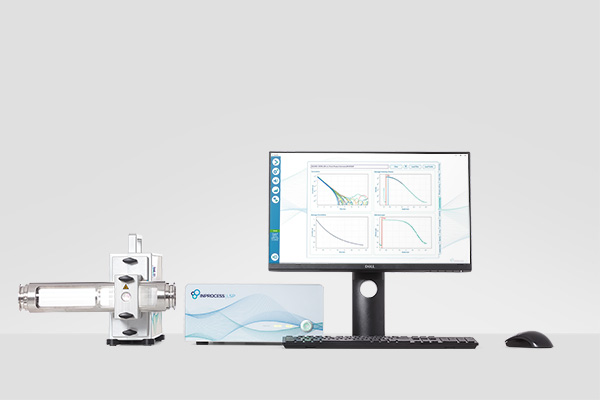
The XsperGo software supports the operation of the NanoFlowSizer and unravels large amounts of data into meaningful particle size information.
Trolley
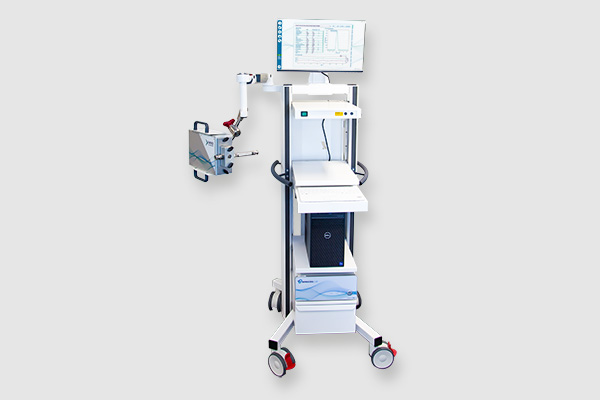
Bring the NanoFlowSizer to the point of measurement; at-line, between rooms, or across shared work areas, while keeping your setup stable, organized and easy to reposition.